
How Internal Leaders Should Structure New Project Intake in Smartsheet
January 01, 2025•4 min read
When a leader takes ownership of a new project inside Smartsheet, the first 30 days set the trajectory for everything that follows. If the intake process is chaotic, the entire project lifecycle will be plagued by missing information, misaligned expectations, and constant back-and-forth communication. Conversely, a well-structured intake process transforms Smartsheet from a passive tracking tool into an active system of record.
For internal leaders, program managers, and ops leads, mastering project intake is the single most impactful step in optimizing a Smartsheet environment. Here is how to structure that process effectively.
The Cost of Informal Intake
Many teams rely on informal methods to initiate new work. A request might come through a Slack message, an email thread, or a passing comment in a meeting. The leader then manually translates that request into a Smartsheet row, often guessing at missing details or spending hours chasing down the requester for clarification.
This approach is fundamentally unscalable. It creates a bottleneck where the leader becomes the sole translator of work, leading to delays and errors. Furthermore, it makes it impossible to accurately track the volume of incoming requests, prioritize them effectively, or measure the time it takes to move a project from intake to execution.
Step 1: Centralize the Request Mechanism
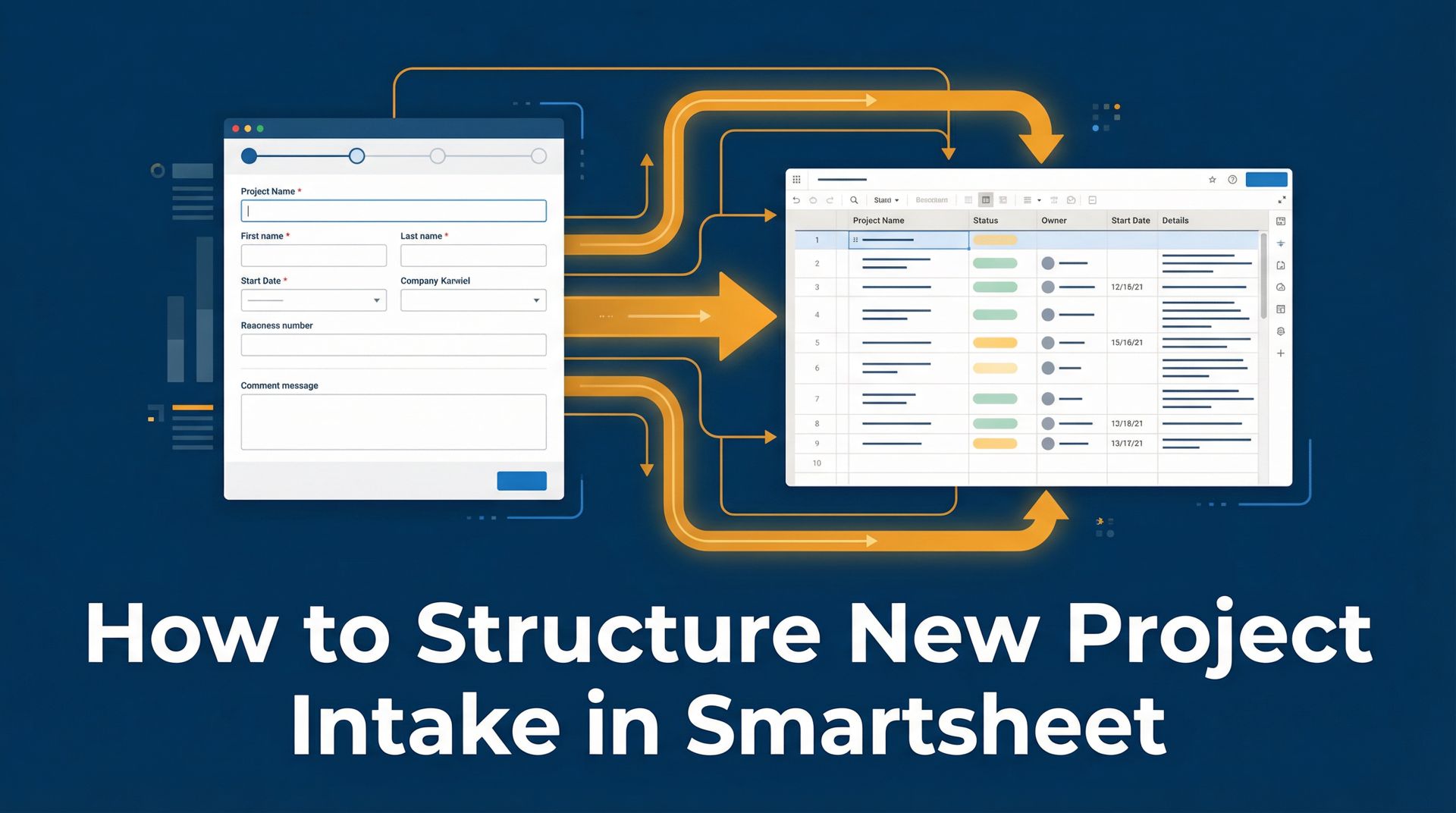
The foundation of a strong intake process is a single, centralized entry point. In Smartsheet, this is best achieved using a standardized Form linked to a dedicated Intake Sheet.
By requiring all new requests to be submitted through a form, leaders can dictate exactly what information is required before a project is even considered. This eliminates the “half-baked” requests that often stall progress. Essential fields should include:
* Project Name and Description: A clear, concise overview of the request.
* Business Justification: Why is this project necessary, and what value does it provide?
* Requested Timeline: When does the requester need this completed?
* Key Stakeholders: Who needs to be involved or informed?
By forcing requesters to articulate these details upfront, leaders ensure that only fully formed ideas enter the system.
Step 2: Establish a Triage and Prioritization Framework
Once a request lands in the Intake Sheet, it needs to be evaluated. Not every request should immediately become an active project. Leaders must establish a clear triage process to review, prioritize, and approve or reject incoming work.
This is where Smartsheet’s column types and conditional formatting become invaluable. Leaders can add internal-facing columns to the Intake Sheet, such as:
* Status: (e.g., New Request, Under Review, Approved, Rejected)
* Priority Level: (e.g., High, Medium, Low)
* Estimated Effort: (e.g., T-Shirt sizing or estimated hours)
By systematically evaluating each request against these criteria, leaders can make objective decisions about what work to take on and when. This also provides a clear, documented rationale for why certain projects were prioritized over others, which is crucial for managing stakeholder expectations.
Step 3: Automate the Handoff
The final step in a structured intake process is moving the approved project from the Intake Sheet into the active execution environment. Manually copying and pasting this data is inefficient and prone to error.
Instead, leaders should leverage Smartsheet’s automation capabilities. A workflow can be configured so that when a request’s status is changed to “Approved,” the row is automatically moved or copied to the active Project Tracker sheet. Furthermore, automated alerts can be triggered to notify the requester that their project has been approved and to alert the assigned team members that new work is ready to begin.
The 30-Day Transition
Implementing a structured intake process requires a shift in team behavior. Requesters who are used to sending a quick email will need to be trained to use the new form. Leaders must hold the line during this transition period, gently but firmly redirecting informal requests back to the standardized process.
While the first 30 days may require some adjustment, the long-term benefits are undeniable. A structured intake process brings order to chaos, provides clear visibility into the pipeline of work, and empowers leaders to manage their teams more effectively.
Want Help Putting This Into Practice? OmniFlowDigital works with teams who are already in Smartsheet and want it to actually function as their system of record. If that sounds like you, let’s talk. Book a Call
Smartsheetproject intakeonboardingprogram managementworkflow design
 OmniFlowDigital
Back to top